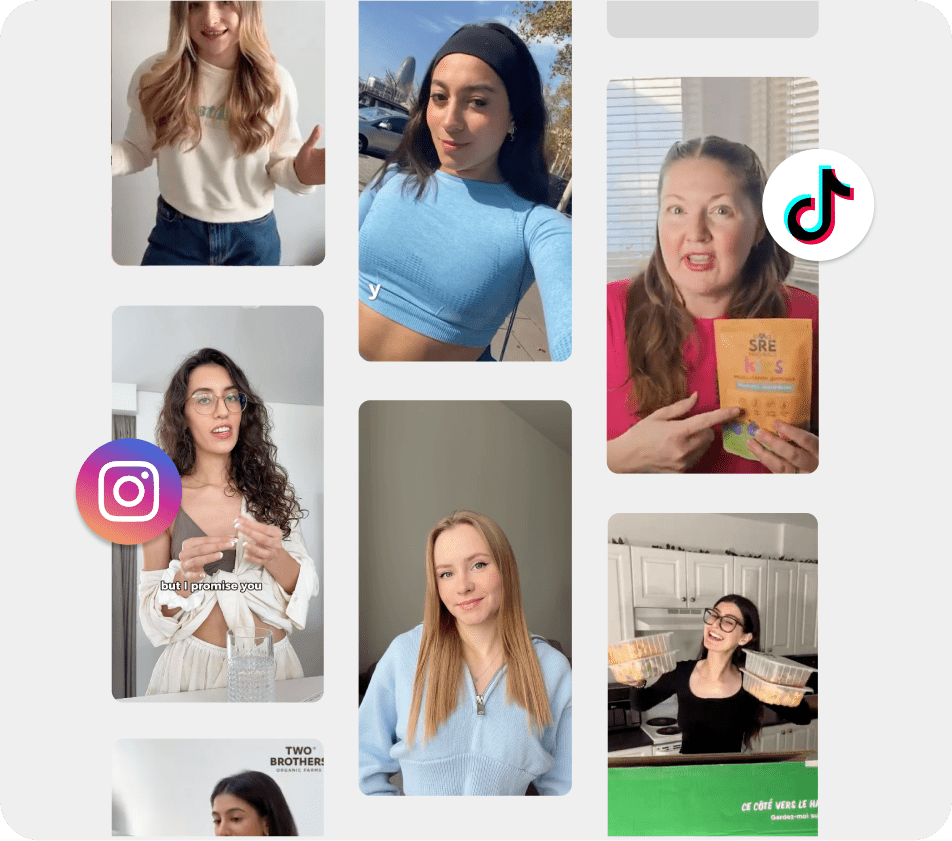

In the last two years, AI has completely reshaped how e-commerce brands create video ads. User-generated content (UGC) has always been one of the highest-converting ad formats—but it comes with challenges: creator fees, slow timelines, inconsistent output, and limited scale.
Today, AI-driven UGC video tools allow brands to produce authentic-looking, conversion-focused videos in minutes, without creators, long shoots, or waiting for revisions.
If you’re an e-commerce founder, marketer, or agency, this guide walks you through the best AI tools that specialize in UGC-style ad creation, what makes them different, and how they can fit into your marketing stack.
What Are AI-Driven UGC Video Ads?
AI-driven UGC video ads are marketing videos that look and feel like real user-generated content, but are produced entirely or partially using artificial intelligence. These videos often include:
- Realistic AI avatars acting as “creators”
- AI voiceovers that mimic human speech patterns
- Product shots generated through AI
- Scriptwriting powered by LLMs
- Social-style templates (TikTok, Reels, Shorts)
- Editing, transitions, and captions automated by AI
They’re designed to replicate human-style videos—unboxings, testimonials, demos, POV shots, and problem/solution storytelling—but at significantly lower cost and faster speed.
Why E-commerce Brands Are Switching to AI UGC
E-commerce teams are moving to AI-driven UGC for five major reasons:
1. Speed
What used to take 7–14 days from influencers, now takes 5–10 minutes.
2. Cost Efficiency
Creators charge anywhere from $100 to $5,000 per video.
AI costs a fraction of that—and scales infinitely.
3. Unlimited Variations
Brands can instantly generate:
- 20 hooks
- 10 creators
- 5 backgrounds
- 3 tones
- Multiple product angles
Perfect for A/B testing on Meta & TikTok.
4. Consistency
AI UGC ensures:
- Same look
- Same lighting
- Same product presentation
- Same CTA
No creator unpredictability.
5. Works for Every Platform
AI UGC tools export formats optimized for:
- Meta
- TikTok
- YouTube Shorts
- Google Ads
- Shopify PDPs
- Amazon listings
- Landing pages
Top Brands That Specialize in AI-Driven UGC Video Creation for E-commerce
Below is the most updated list of leading tools (as of 2026) that specialize in AI-driven UGC ads specifically for e-commerce brands.
1. Tagshop AI (Best Overall for E-commerce Brands)
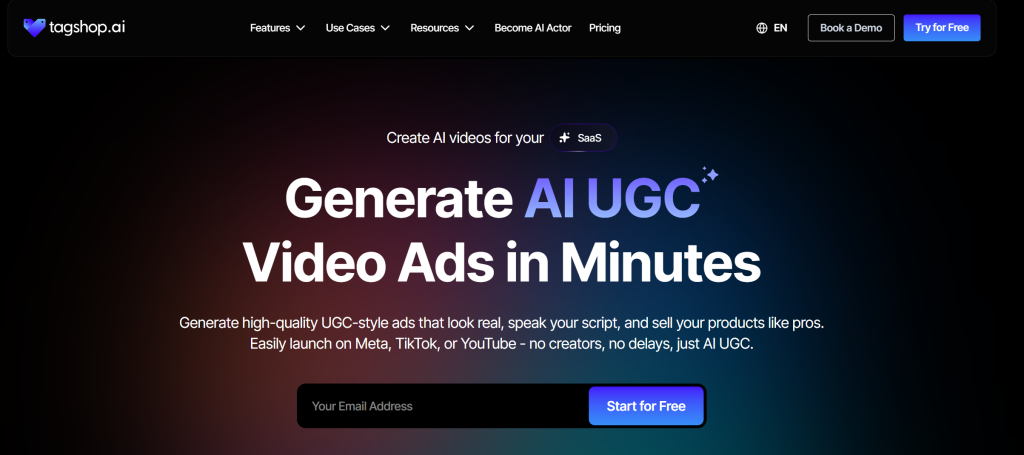
Tagshop AI is one of the most complete AI UGC video creation platforms built specifically for e-commerce. It combines UGC realism with advanced AI automation, making it ideal for ad performance.
Key Features
- AI UGC Avatars (realistic human models)
- AI-generated product B-roll
- AI URL-to-Video (convert a product page URL directly into a video)
- AI voiceovers with emotional tone
- Product image generation (powered by Nano Bnana Pro)
- Social-style ad templates (TikTok, Meta, YouTube)
- One-click scripts, hooks & CTAs
- “Ad-ready” export formats
Why E-commerce Brands Love It
- Perfect for single SKU & DTC brands
- Generates both video ads + product imagery
- Works with Shopify, WooCommerce, and Amazon
- Ideal for agencies and growth marketers
Best For
- Paid ads
- Product demos
- Testimonial-style videos
- B-roll close-ups
- Landing page explainers
2. Vizard (Great for Turning Long Videos Into UGC Ads)
Vizard is primarily a repurposing tool, but brands use it for UGC-style ad creation.
Strengths
- Auto-clips long videos
- Social-style ad cuts
- Captions, zooms, meme-style formatting
Limitations
- Not built to generate AI avatars or product shots
- Needs source content
Best when you already have footage.
3. Veo (Meta’s AI Video Model)
Veo is Meta’s powerful generative video model with extremely realistic output.
Strengths
- High-quality, cinematic visuals
- Scene generation from text
- Dynamic movement
Limitations for E-commerce
- Not specialized for UGC
- Harder to generate “talking style” UGC ads
- Limited creator-style formats
Best for visual, lifestyle product ads—not testimonial UGC.
4. Nano Bnana / Nano Bnana Pro (Best for Product Shots)
Nano Bnana Pro is one of the leading AI image generators used by e-commerce brands to create:
- Studio-quality product photos
- Model shots
- Lifestyle mockups
- Background swaps
Why It’s Important for AI UGC Videos
Brands pair Nano Bnana Pro images with AI UGC video tools (like Tagshop AI) to produce better:
- Opening shots
- Product close-ups
- Unboxing scenes
- B-roll visuals
It’s not a video tool—but it’s used heavily in the AI UGC workflow.
5. Kapwing AI
A user-friendly editing tool with strong UGC templates.
Key Features
- Reels/TikTok-style templates
- Captions & auto-editing
- AI rewriting & resizing
Limitations
- No AI avatars
- Less “human realism” than specialized tools
6. Colossyan
One of the best tools for AI presenter videos.
Strengths
- Professional-looking presenters
- Script to video automation
- Good for onboarding and explainers
Limitations
- Not optimized for UGC-style videos
- Avatars feel more “studio” than “social media”
7. Synthesia
The OG of AI video generation.
Strengths
- Corporate-style avatars
- Multi-language presenter videos
- Great for training content
Limitations for UGC
- Not designed for TikTok-style content
- Lacks raw, handheld UGC feel
Better for tutorials, not direct-response ads.
8. Pipio
A lightweight AI avatar tool aimed at small creators.
Strengths
- Simple, affordable
- Quick generation
Limitations
- Limited movement
- Avatars look slightly robotic
- Not ideal for performance ads
Features to Look For in an AI UGC Video Tool
If you’re choosing a tool for e-commerce, evaluate based on:
1. Realistic AI Creators
Do the avatars look like actual humans?
2. E-commerce-Focused Templates
Pre-defined formats for:
- TikTok ads
- Instagram Reels
- Meta advantage+ placements
3. Ability to Create Videos Using Product URL
Tools like Tagshop AI pull:
- Product title
- Images
- Highlights
- Pricing
- Use cases
And auto-generate videos.
4. Fast Product Shot Generation
AI product images save time and improve ad quality.
5. Multi-voice, Multi-tone AI audio
Energetic, conversational, friendly, professional—depending on brand.
6. Customizable scripts
Should allow:
- Hooks
- Body
- CTA
- Problem/solution angles
7. Export and platform optimization
One-click export for:
- 9:16
- 1:1
- 16:9
8. Scalability & pricing
Important for teams running multiple ad variants.
How E-commerce Brands Use AI UGC Videos
1. Product Demos
AI creators demonstrating how products work.
2. Unboxing Simulations
AI-generated hands, table views, packaging.
3. Testimonials
AI avatars acting as customers giving reviews.
4. Problem–Solution Hooks
Common for skincare, supplements, gadgets, tools.
5. B-Roll Product Close-Ups
Enhance meta ads and landing pages.
6. A/B Testing at Scale
AI makes it easy to test:
- 20 hooks
- 10 creators
- 5 product angles
Final Verdict: Which AI UGC Tool Is Best for E-commerce?
If you’re looking to scale paid ads, video content, and product creatives for e-commerce:
Best Overall: Tagshop AI
Ideal for:
- TikTok ads
- Meta campaigns
- Landing page videos
- UGC-style product demos
- Agencies managing multiple clients
Conclusion
AI-driven UGC video creation is no longer optional—it’s becoming the default way e-commerce brands produce ad creatives. With AI tools offering incredible realism, faster output, and unlimited variations, brands that adopt AI early will outperform competitors on cost efficiency, speed, and creative volume.